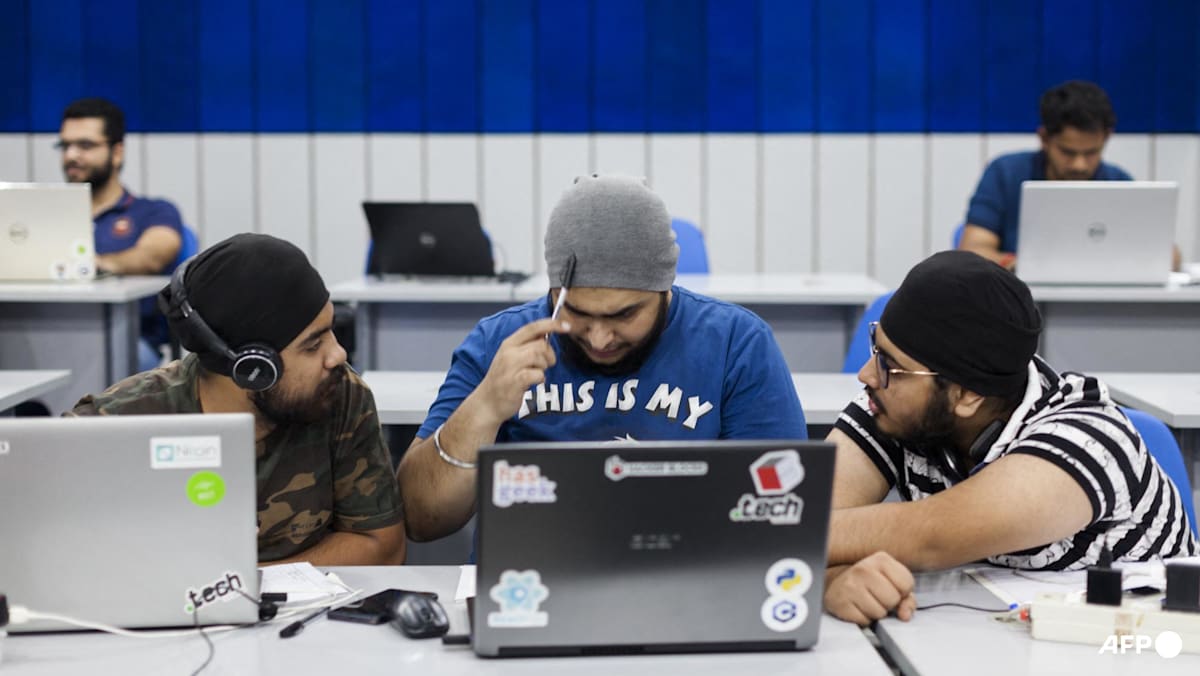
The Indian information technology (IT) industry, one of the largest private-sector employers, is undergoing a significant transformation in how it hires and develops entry-level talent. With artificial intelligence (AI) increasingly automating traditional coding tasks, Indian IT giants are drastically reducing the number of fresh engineering graduates recruited, shifting demands towards candidates with deeper technical expertise and business understanding from day one.
Historically, companies like Tata Consultancy Services (TCS) and Infosys recruited fresh graduates in large volumes and invested heavily in training them over time. However, recent trends reveal a sharp decline in intake. For example, TCS’s hiring of engineering graduates in 2026 has dropped to less than half of that four years prior, while Infosys’s recruitment in 2025 was about 80% lower than three years earlier.
Experts highlight that AI’s takeover of routine coding and testing tasks means that junior engineers now need skills beyond technical coding—such as client engagement, business process transformation, and managing complex technology solutions. Workforce advisors emphasize this shift encourages companies to seek candidates who can approach customer problems analytically and translate those challenges into innovative technology-driven solutions.
In response, Indian IT firms have revamped their training programs to include generative AI, problem-solving, and design thinking. However, industry leaders warn that while such training introduces fresh hires to AI use, true specialization—like becoming machine learning engineers or AI architects—requires years of hands-on experience.
This evolving landscape presents concerns about the ‘missing middle’—a potential shortage of mid-level managers with the requisite AI and domain expertise. Some multinational companies in India currently favor experienced hires for advanced roles due to immediate expertise requirements. Nonetheless, analysts argue that companies must invest more in nurturing fresh graduates to build a sustainable talent pipeline for the future.
Universities are recognized as critical players in this transition. Beyond incorporating AI tools, academic institutions need to cultivate advanced skills such as system-level thinking, responsible decision-making, and professional judgment earlier in students’ education. Collaboration between companies and universities has increased, with initiatives such as Wipro’s extensive college outreach and faculty training programs aiming to better align academic curricula with industry needs.
Experts advocate for broader access to mentorship, virtual internships, and faculty development, especially for non-elite institutions, to democratize opportunities. Furthermore, integrating AI specialists within university departments and involving industry professionals in teaching are proposed cost-effective strategies for accelerating curriculum updates.
Ultimately, as AI reshapes entry-level roles, Indian IT firms and educational institutions must coordinate closely to develop future-ready talent. This will ensure that graduates arriving at companies are equipped not only with technical skills but also with a deep understanding of business challenges and AI-driven innovation—a necessity for sustaining India’s IT leadership in a rapidly evolving global market.
Source: CNA