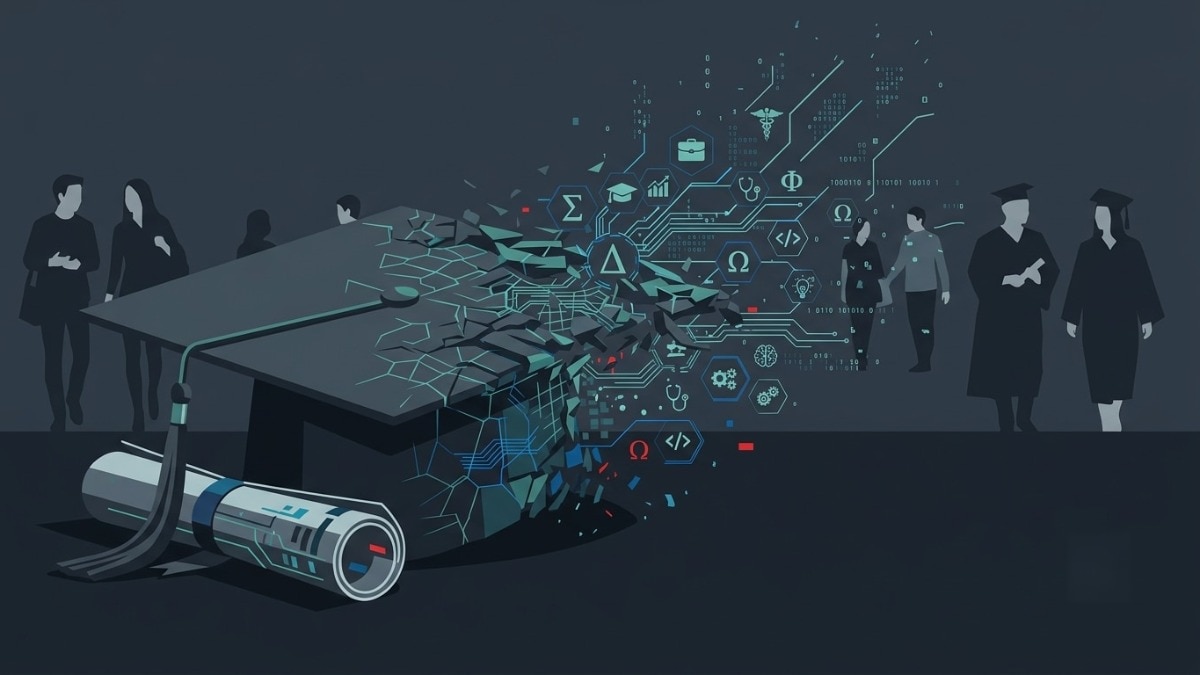
As artificial intelligence (AI) continues to revolutionize business operations, Indian companies are adjusting their workforce strategies to keep pace with technological advancements. According to KPMG’s 2026 India CEO Outlook, 52% of surveyed Indian CEOs are planning workforce reductions in specific areas, while 77% are actively hiring employees with AI and technology-related skills. This dual approach highlights the nuanced impact AI is having on hiring practices across industries.
The survey, conducted between August and September 2026 with 125 Indian CEOs, emphasizes a strategic shift towards creating a workforce that can effectively collaborate with AI systems. A significant 87% of CEOs indicated a focus on retaining and retraining high-potential employees to adapt to changing workplace dynamics. Additionally, 84% are redesigning roles, career paths, and team structures to facilitate better human-AI interaction and collaboration.
Entry-level positions and routine administrative tasks are under increased scrutiny as companies reassess the essential skills needed in an AI-enabled environment. Notably, 86% of CEOs are reevaluating the skill sets required for entry-level roles, and 79% acknowledge that AI is transforming employee training and development practices.
Reskilling and upskilling have become top priorities, reflecting the urgent need to prepare employees for new responsibilities alongside AI tools. Nearly half of the CEOs (48%) are implementing organization-wide AI education programs, while 44% are focusing on role-specific training, and 41% are actively retraining staff for AI-supported positions.
Sunit Sinha, Partner and Head of Human Capital Advisory Solutions at KPMG India, stresses that workforce transformation today involves more than just adopting new technologies. It requires redesigning job roles, fostering adaptable skill sets, and cultivating a culture of continuous learning to ensure harmonious human-AI collaboration. He also points out that companies investing in employee development with the same vigor as technology adoption are better positioned to extract sustainable value from AI initiatives.
This evolving landscape suggests that AI-driven changes will likely alter the composition of company workforces rather than simply expanding or shrinking total employment numbers. For talent acquisition and HR professionals, this means placing greater emphasis on identifying candidates who possess or can develop AI partnering capabilities. For employees, continuous learning and adaptability to shifting job requirements will be critical to career longevity.
Ultimately, whether AI results in net job cuts or new employment opportunities depends on how organizations implement the technology and integrate it into their workflows. The findings from KPMG offer valuable insights into current CEO plans and priorities, underscoring the complex balance between optimizing productivity and managing human capital amid AI-driven transformation.
Source: Business Today