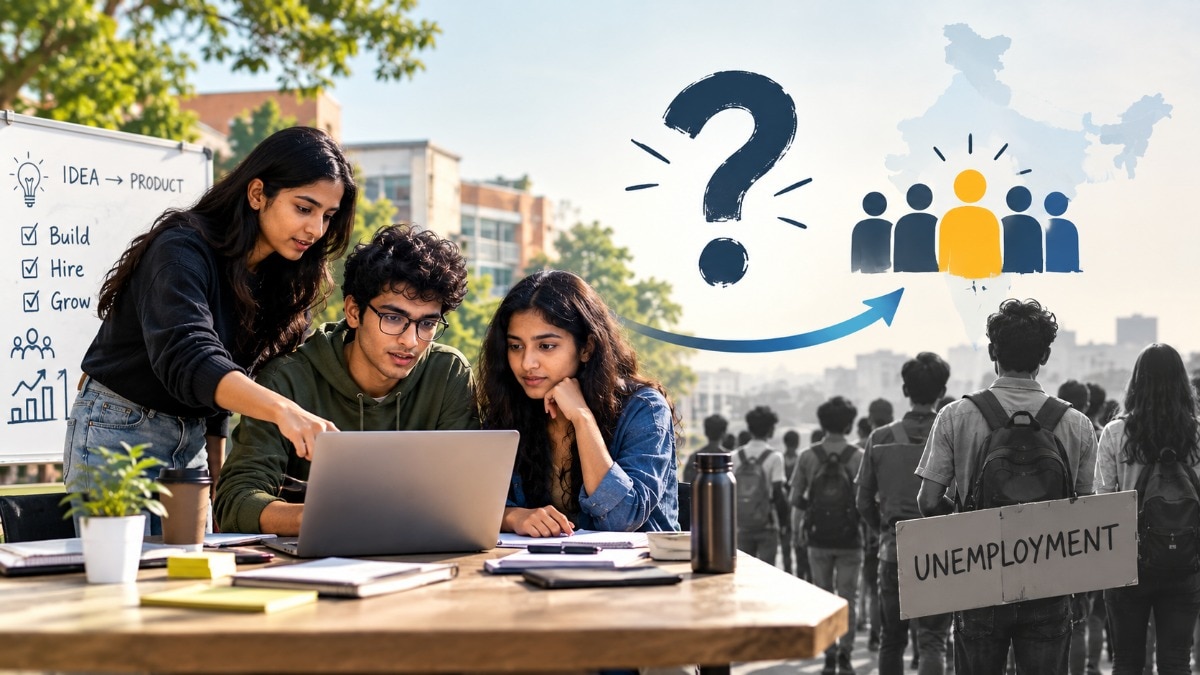
In Indian institutes of technology and other premier campuses, a new trend is emerging where classmates are no longer just peers competing for placements—they are becoming bosses and colleagues within student-founded startups. These ventures are transforming the traditional campus employment ecosystem by offering students opportunities to work on real projects, earn income, and develop entrepreneurial acumen alongside their studies.
Students like Arjun Sharma from IIT have evolved their ideas into startups employing multiple fellow students across technology, content, sales, and operations. This peer-centric hiring approach not only leverages shared understanding and trust but also provides coworkers with meaningful ownership and hands-on experience beyond routine internship tasks.
Recent surveys underline the growing footprint of student entrepreneurship in India. According to the GUESSS India 2025 report, nearly 22% of surveyed students are involved in entrepreneurial ventures, with many startups sustaining regular sales and maintaining small full-time teams—an encouraging median size of five employees compared to just two globally.
However, sustaining these ventures presents challenges. Unlike formal companies, many student startups operate without official registrations or structured salary models, often relying on informal arrangements among friends. While such setups create initial employment opportunities, their longevity and capacity to provide stable jobs remain uncertain.
The nature of student startups varies widely—from tech solutions to online mentoring platforms. For example, education ventures like AcadBoost Technologies have scaled content teams but also experienced a reduced need for new hires due to advancements in AI automating content creation and coding tasks. This evolution highlights how technology influences hiring demands, often shifting from quantity to quality and specialization.
AI startups, exemplified by companies like Fastoprox, focus on automating repetitive business tasks by employing both human and AI agents. Their strategic hiring emphasizes building reliable, scalable solutions aligned with current revenue, underscoring the prudence required in startup workforce expansion.
Beyond job creation, student startups are addressing India’s broader employability gap. They equip participants with real responsibilities early in their careers, often circumventing employer hesitance toward fresh graduates who require training. Working in close-knit teams enables students to develop ownership, improve accountability, and demonstrate tangible accomplishments in authentic business environments—experiences highly valued in later job searches.
Yet, prospective student employees must exercise caution. Not all startups offer formal employment contracts, consistent salaries, or long-term stability, especially as founders graduate or pivot. Evaluating a startup’s sustainability, formal agreements, and future plans is essential to avoid precarious work situations.
The path from idea to enduring business is fraught with challenges. Many student ventures are nascent or short-lived, experimenting with multiple attempts before achieving traction. The transition from informal projects to registered entities also requires support, such as entrepreneurship programs and incubators, which have been shown to increase success rates significantly.
The collective impact of thousands of such ventures, each employing a handful of people, could meaningfully contribute to job creation across India’s vast youth population. By fostering a culture of entrepreneurship on campuses, supporting practical startup education, and encouraging sustainable business practices, student-led startups can evolve into credible employment engines.
In conclusion, campus startups represent a promising, albeit complex, dimension in India’s employment landscape. They empower students with skills and jobs, yet require formalization, revenue sustainability, and adaptive hiring aligned with technological progress—particularly AI integration—to become reliable long-term employers.
Source: India Today